Imagine you’re in a crowded tube carriage during rush hour, or fighting for standing room on a bus journey, or just passing the time in a coffee shop and your phone vibrates.
The reply you’ve been waiting for, an important email? No, it’s an unwanted, unpleasant, explicit image and you don’t know who it’s from.
No Flashing Matter looks at Cyber Flashing – What is it? What is it like? What is being done?
A radio documentary by Ellie Moore at Bournemouth University.
MUSIC AND SFX: Free sounds Purple Planet PMO.bournemouth
During a lab test, scientists found what is known as a T-cell in people’s blood.
Georgina Barnes found out more – listen to her radio package below.
The discovery could potentially kill cancers such as breast, blood and skin cancer.
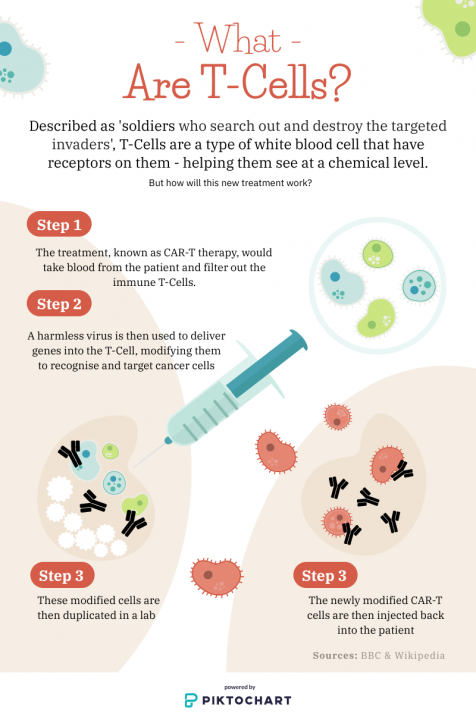
But what are T-Cells?
Infogram describing function of T-Cells and CAR-T Therapy. Credit: Georgina Barnes
Explaining the science behind this new discovery, Dr Tim Banks, Head of research at Tenovus Cancer Care, said this was “very exciting for research”.
He also talked about immunotherapy, saying: “It’s a lot kinder on the body.
“It only attacks those cancerous cells.
“Radiology basically burns off the cancer but it also those around it.
“All the time it’s getting better and better at targeting just those cancer cells, even though the area around it can get damaged.”
Listen to the full interview below.
Speaking to someone who has suffered from cancer, Ben Ainscough is a 20-year-old Bournemouth University student studying Sports Development and Coaching Sciences.
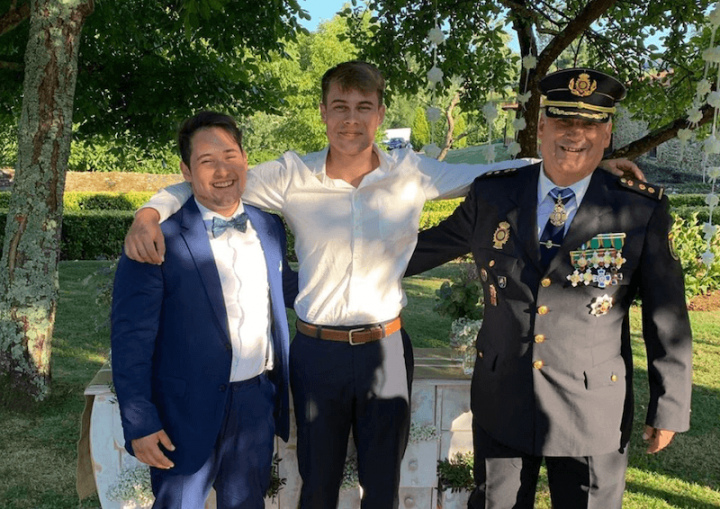
Ben Ainscough (middle) with his family. Credit: Ben Ainscough
When Ben was two-years-old, he was rushed to Great Ormand Street after doctor’s found he hadhepatoblastoma. This is an uncommon malignant liver cancer that can occur in infants, with a survival rate of 80%.
His form of cancer was so rare that fewer than one in a million children get it, describing his treatment as a “trial and error”.
Finishing chemotherapy and radiotherapy at five-years-old, Ben said that the scars knocked his self confidence:“I’ve got a few scars around my side and I’ve got a big scar around my front, and just little scars from where they had to inject me, where they had to cut me open, have my catheters and all of that.
“I’ve grown to appreciate them and know they’re the reason that I’m basically still alive.”
Speaking about his second battle with cancer, Ben developed familial (adenomatous) polyposis. These are polyps in the bowel that have the potential to turn cancerous later on in life. At 14-years-old, the doctor’s told him he’d have to undergo an operation to remove them:
“I was meant to have a key hole surgery, but because of the previous cancer they had to do it the old traditional way.
“So it took a lot more time and a few blood transfusions.
“It left me in a bit of a more worse way.
“I had to leave sixth form and collegebecause I had to basically start to learn to walk again.”
After finding out about this new potential method of curing cancer, Ben thought that “any discoveries’ great, and this one especially, because it’s relatively natural.
“Don’t get me wrong, chemotherapy and radiotherapy, they’re all brilliant, but they do have massive side effects.
“Your body’s so smart it’s going to eliminate the cancerous cells and all of that so that is pretty crazy.
“My parents wouldn’t have (had) to spend hundreds of nights in a hospital being worried about me, and I think it would stop so many deaths and stop so many worries.
“It’s great that we’ve got this but we’ve still got to keep on top of it, check yourself and all of that for bumps and lumps.”
Listen to the full interview below.
Although the potential of this treatment being put into play, scientists and the public of Bournemouth are hopeful about this new discovery.